

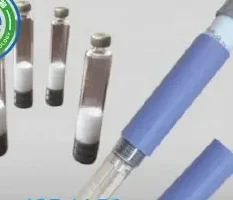
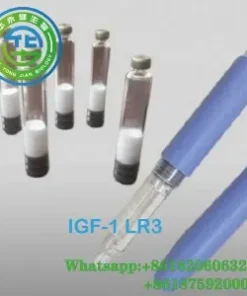
IGF-1 LR3 Anti-Wrinkle Muslce Gaining Peptides 99% Assay 946870-92-4 Anti-Aging
Product Name:IGF-1 LR3
CAS: 946870-92-4
Payment Method:Bank Transfer, Bitcoin
Usage:Muscle Gaining
Shipping Method: EMS, HKEMS, FEDEX, DHL, UPS, Aramex, ETC
Color:White
High Light:Pharmaceutical Anabolic Steroids, Pharmaceutical Fine Chemicals
IGF-1Lr3 is basically a polypeptide hormone that has the same some of the same molecular properties as insulin.Ig-f-1 dose actually stand for insulin-like growth factor. IGF-1Lr3 is mainly responsible for long bone growth in children and it also affects muscle growth and repair of adults. IGF-1Lr3 is a more potent version of IGF-1Lr3. It’s chemically altered i like to think “enhanced” to prevent deactivation by IGF-1Lr3 binding proteins in the bloodstream. This results in a longer half-life of 20-30 hours instead of 20 min… So that means a far more effective version than the short chain we we re perhaps more familiar with.IGF-1Lr3 is also known as IGF-1Lr3 or Insulin-Like Growth Factor-I Long Arg3.
IGF-1Lr3 has a half-life of about 20-30 hours and is much more potent than base IGF-1LR3. Since its half-life is about a day, the IGF-1Lr3 will circulate the body, for around 24 hours, binding to receptors and activating cell communication that improves muscle growth and fat loss.LR3 prevents glucose from entering into cells, which, in turn, forces the body to burn fat and not sucrose. In addition, its long half-life is desirable for another reason; site injections aren’t necessary, as IGF-1Lr3 will cycle the body binding to all muscle cells for about a day.
IGF 1 LR3 is able to exert its beneficial effects such as increased muscle mass through inducing muscle hyperplasia. Hyperplasia is a state wherein there is an increase in the number of new muscle cells. It also has the ability to improve supplement uptake you are currently using. In addition to this, it is able to decrease binding of IGF 1 on binding proteins. These binding proteins actually prevents the biological activities of IGF hence, inhibiting its function through the use of Long R3 IGF-1 could greatly benefit users in developing improved muscle physique.
Why is this IGF-1 important for a bodybuilder or athlete? Let’s take a look at the list:
1) Helps regulate fat for use as energy, resulting in fat loss.
2).Contributes to anti aging. As we get older, IGF-1 production slows down and this
results in cell reduction. Low levels of IGF-1 are linked to heart failure, lower brain
cell regulation and neuron function. Not to mention muscle tissue breakdown.
3).Helps to increase nutrient shuttling (protein synthesis).
4).Increases regenerative functions of nerve tissues.
5).Boosts the ability to cause hyperplasia in muscle cells resulting in fuller muscle Tissue.
Reviews
There are no reviews yet.