

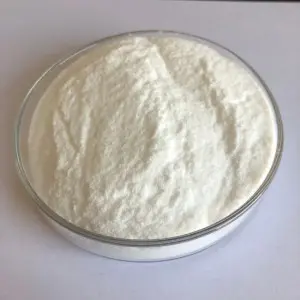


S-23 Product Description
Developed by GTx, S-23 is an orally active nonsteroidal SARM with a very high binding affinity to androgen receptors. This makes it stronger than other popular SARMS like Ostabolic (mk-2866) or Andarine (S-4). Therefore, the main effects of S-23 are increased muscle mass, decreased fat mass, and a decrease in the size of the prostate. Additionally, in a study done on rats a dose equivalent to 15 milligrams (mg) for a 180lb male was shown to also increase bone mineral density, as well as promote muscle mass growth and fat loss. Hence, S-23 is versatile in that it can be used for bulking and for cutting. S23 or (2S)-N-(4-cyano-3-trifluoromethylphenyl)-3-(3-fluoro-4-chlorophenoxy)-2-hydroxy-2-methyl-propanamide is a new SARM, which is developed as a possible male hormonal contraceptive. It links to the androgen receptor (AR) more intensely (with a Ki of 1.7nM) as compared to older medicines such as Andarine.
As of today, what we know is that S23 is an easy-to-dose oral SARM that can boost lean muscle mass growth while being tissue selective at the same time.
Sarms S23 is an investigational selective androgen receptor modulator (SARM) developed by GTX, Inc as a potential male hormonal contraceptive. It binds to the androgen receptor more strongly than older drugs such as andarine with a Ki of 1.7 nM, and in animal studies it showed both a good ratio of anabolic to androgenic effects, and dose-dependent suppression of spermatogenesis with spontaneous recovery after cessation of treatment.
A 2009 study performed on rats showed potential for S-23 to be used as a male contraceptive. In this study, six rats were given a dose of 0.1 mg per day for 10 weeks. As a result, both LH (Luteinizing Hormone) and FSH (Follicle-Stimulating Hormone) levels decreased. These effects were statistically significant, since four of the six rats had no sperm in the testis. What’s more, none of the rats was able to impregnate a female rat during mating trials. However, this contraceptive effect was temporary – after just 100 days from last dose the infertility was reversed, and there was a 100% pregnancy rate.
A high throughput screening campaign was conducted to identify small molecules with the ability to inhibit the interaction between the vitamin D receptor (VDR) and steroid receptor coactivator 2. These inhibitors represent novel molecular probes to modulate gene regulation mediated by VDR. The peroxisome proliferator-activated receptor δ (PPARδ) agonist GW0742 was among the identified VDR-coactivator inhibitors and has been characterized herein as a pan nuclear receptor antagonist at concentrations higher than 12.1 µM.
The highest antagonist activity for GW0742 was found for VDR and the androgen receptor (AR). Surprisingly, GW0742 behaved as PPAR agonist/antagonist activating transcription at lower concentration and inhibiting this effect at higher concentrations.
Reviews
There are no reviews yet.