



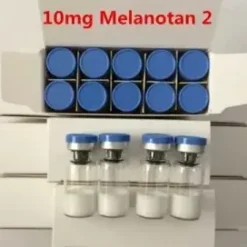
99% High Quality Peptide Hormones Melanotan-II/Malanton 2/MT2 for Muscle Strength CAS 121062-08-6


Other Name:MT 2 , MT II
MF:C50H69N15O9
MW:1024.18
Storage Temp:-20°C
Solubility H2O:5 Mg/mL, Soluble
Packaging:In Vials
Specification:10 Mg/vial
High Light:growth hormone peptides, bodybuilding anabolic steroids
| Product Name | Melanotan II |
| Chemical Name | Melanotan, Melanotan II, MT, MTII, MT-II, MT2, MT-2, |
| CAS | 121062-08-6 |
| Molecular Formula | C50H69N15O9 |
| Molecular Weight | 1024.18 |
| Specification | 10mg/vail |
| Assay | 99.5% |
| Appearance | White powder |
Melanotan may refer to one of two separate peptides : Afamelanotide, originally developed under the names “Melanotan-1” or “Melanotan I” for skin tanning, a drug currently in trials in implant form as a prophylactic treatment for a series of light affected skin disorders and potential skin cancer preventative agent.
Melanotan II (also known as MT-II or MT-2) is an injectable peptide hormone used to promote tanning. MT-II works by stimulating alpha-melanocyte receptors, which promotes formation of melanin in response to sun exposure. When a substantial amount of MT-II has been taken within recent “memory” of the skin cells, an individual tans as if he were a genetically darker type.
Melanotan II, a drug originally developed as a skin tanning agent, but subsequently investigated as a potential treatment for sexual dysfunction
Melanotan 2 (also referred to as Melanotan II) is a synthetically produced variant of a peptide hormone naturally produced in the body that stimulates melanogenesis, a process responsible for pigmentation of the skin. This peptide hormone, called alpha-Melanocyte stimulating hormone or MSH, activates certain melanocortin receptors in the process of exerting its effects. Indeed, MSH also exerts potent influence over lipid metabolism, appetite, and sexual libido via these melanocortin receptors. As a result, Melanotan 2 has been shown in studies to exhibit appetite suppressant, lipolytic, and libido-enhancing effects in addition to promoting skin tanning. Melanotan 2 has been researched extensively for use in protecting against the harmful effects of ultraviolet radiation from sunlight due to its melanogenesis-stimulating properties.
Additionally, Melanotan 2 and a similar synthetically produced variant, known as PT-141, have been studied at length as a potential remedy for the treatment of sexual dysfunction; specifically, male erectile dysfunction.
A few synthetic analogues of α-MSH have been investigated for their apparent photoprotective effects against ultraviolet (UV) radiation from the sun, namely Melanotan (afamelanotide) and Melanotan II, referred to as Melanotan 2. Bremelanotide, another analogue of α-MSH similar to Melanotan 2, is currently under development for the treatment of sexual dysfunction. All of these melanotan peptides have significantly greater potencies than α-MSH, but with distinctive selectivity peptide profiles.
Melanotan II requires cumulative dosing to be effective. Depending on the individual, needed cumulative dose will typically be from 10 to 40 mg, with fairer individuals usually requiring amounts at the higher end of the range. Depending on the total amount needed and the daily dosing suitable for the individual, MT-II injections will need to begin at least a week prior to a need for improved tanning. More typically, MT-II use should begin at least a month prior to such need.
Melanotan II can also be used on a cycled basis to maintain improved ability to tan. Further, Melanotan II can be used on occasion for prosexual effect.
For a bodybuilder planning to compete on stage, there is a considerable amount of time and attention to detail committed before they are ready to compete. Being muscled up and defined is only accentuated by a nice tan to make lines and definitions pop out and become more evident to viewers and judges. Enter the heptapeptide Melanotan II, now bodybuilders can actually protect themselves from over exposure to the sun while boosting melanin. This results in a darker and more tanned complexion. When Melanotan II is added to a peptide protocol leading up to a show, it will boost melanin levels, resulting in tanner skin; in addition, it will increase fat loss and muscle hardness.
Melanotan II can also be used on a cycled basis to maintain improved ability to tan.
An example convenient amount of water is 2.5 mL. When this amount of water is used, the resulting solution contains 4 mg of MT-II per mL. If for example wishing to take a dose of 1 mg, a volume of 0.25 mL, or “25 IU” as marked on an insulin syringe, would be taken by injection. Injection may be subcutaneous, intramuscular, or intravenous, according to personal preference.
Injection typically is only once per day, but where a person is first trying the drug and judging tolerance, injection may be divided into two smaller amounts per day.
Typical dosage range is 0.5 to 2.0 mg/day, with a preferred range of 0.5 to 1.0 mg/day. However, it’s best to first assess tolerance with lower dosing of 0.25 mg at a time.

Reviews
There are no reviews yet.